
How to Create Height on a Buffet Table: A Caterer's Guide
Why buffet height matters
A flat buffet table loses guests. Eyes scan the horizon, not the surface, so a 12-foot table of identical-height platters reads as a single monotonous line. Adding vertical layers changes the physics of the display. Guests approach slower, notice more items, and move through the buffet in a pattern the caterer controls.
Height is not decoration. It is flow control.
Last updated: June 2026. Now includes answers to the top questions caterers ask about how to create height on a buffet table.
The three-zone rule
Professional catering displays use three height zones to create visual hierarchy:
- Base zone (0 to 4 inches): platters, bowls, flat serving pieces. Guest hands naturally rest here.
- Mid zone (5 to 9 inches): chafing dishes, cake stands, medium risers. The working height where most dishes live.
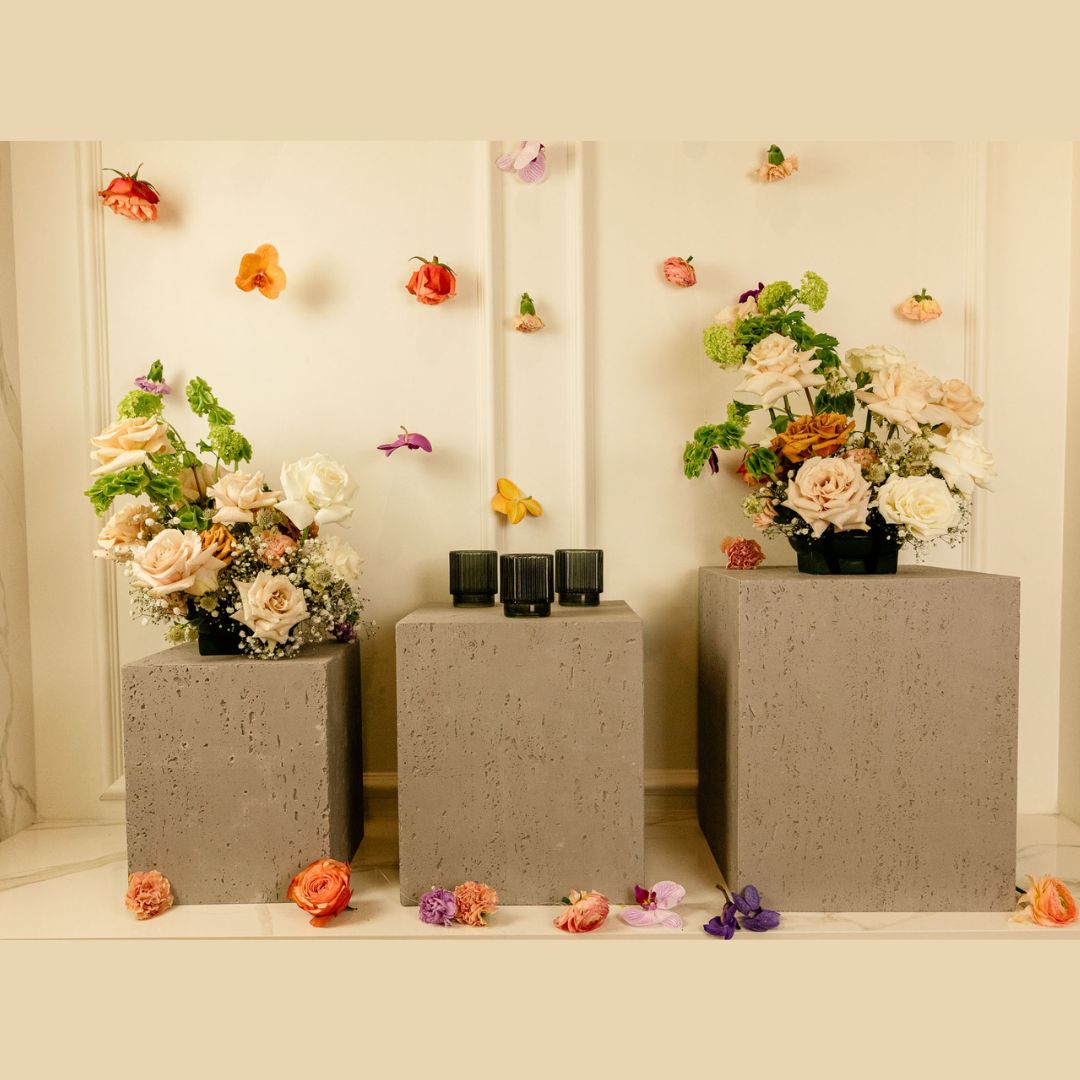
- Hero zone (10 to 18 inches): tall plinths, cascade risers, floral centerpieces. Where the camera lands and where guests look first.
If any zone is missing, the display feels incomplete. A table with only base and hero zones reads as two disconnected arrangements. A table with only mid and hero zones looks cluttered because the eye cannot find a resting point.
The seven tools caterers use to build height
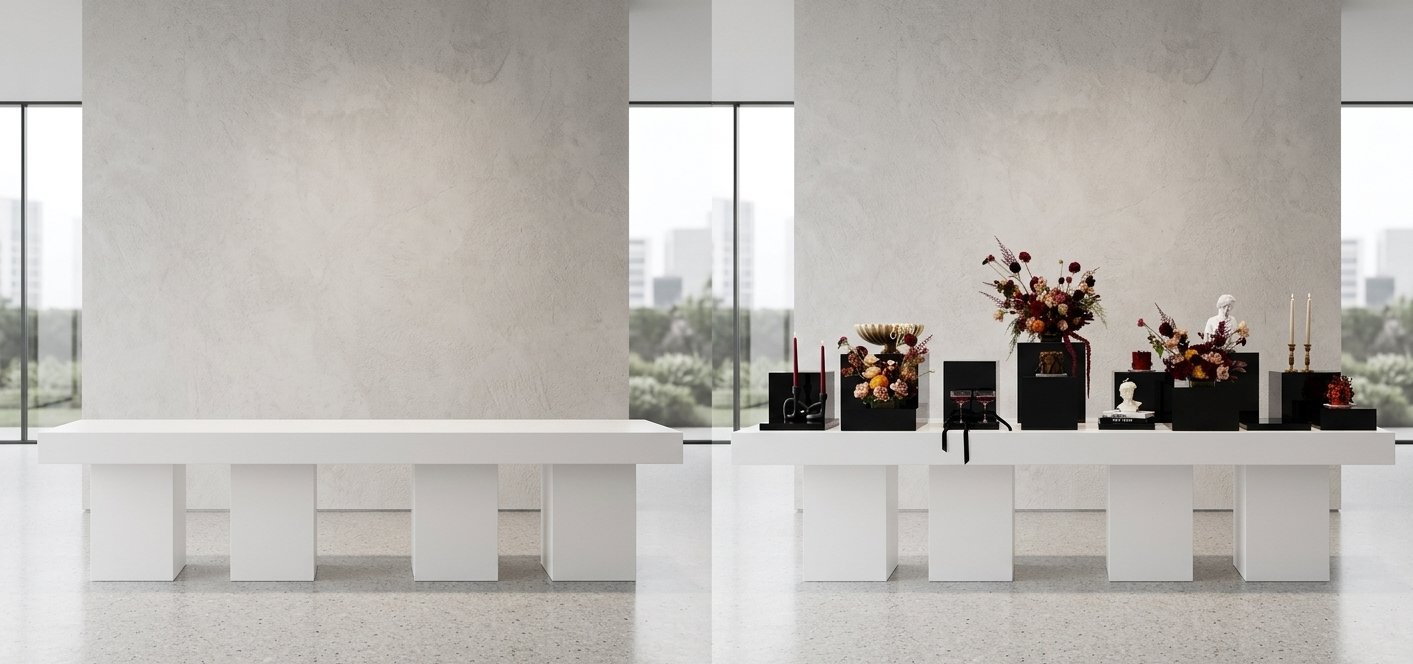
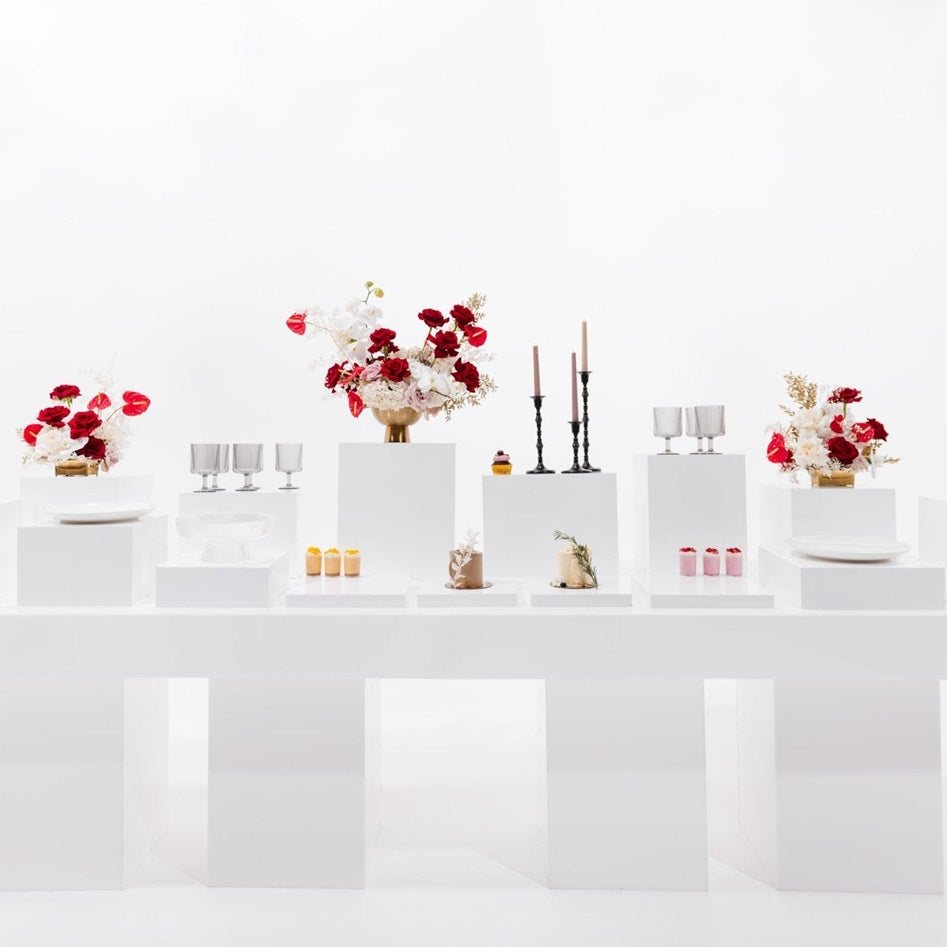
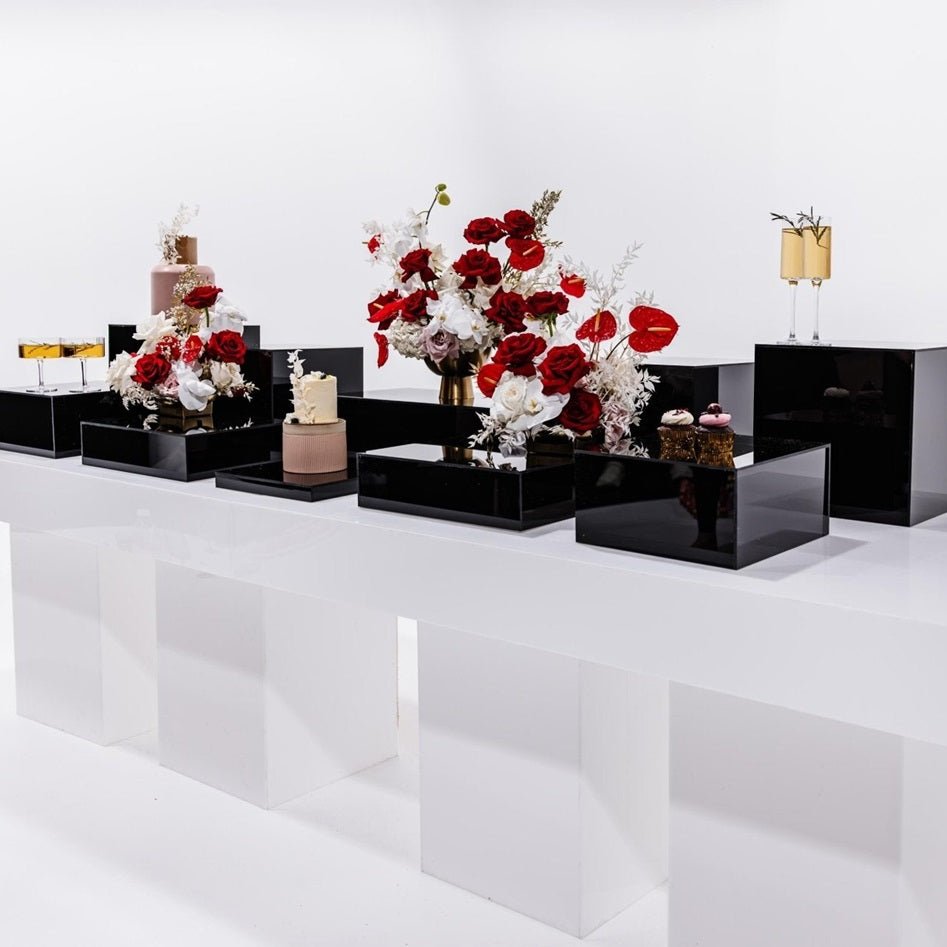
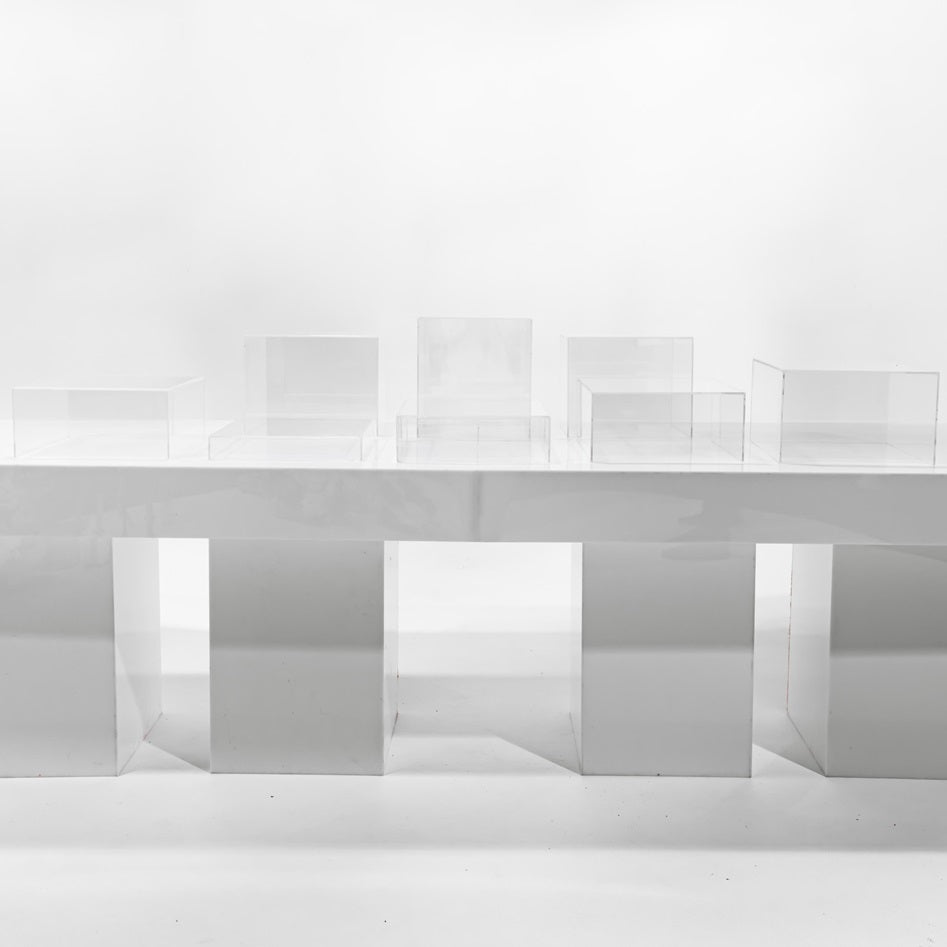
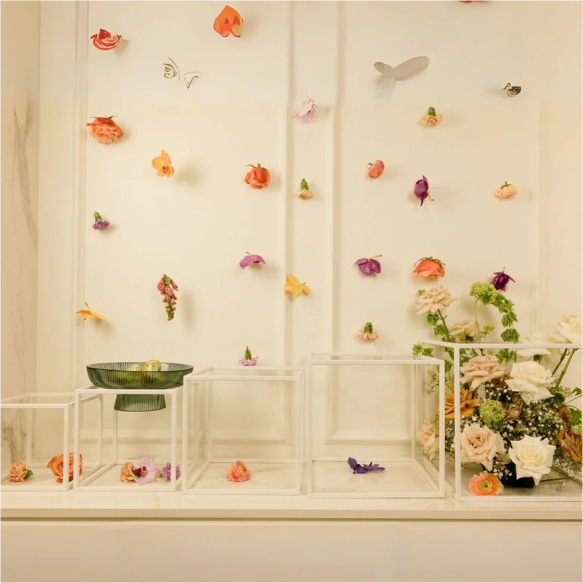
1. Acrylic plinths Tall rectangular or cylindrical blocks in clear, white, black, or mirrored finishes. Commercial-grade acrylic plinths are the fastest way to push a hero dish into the upper zone. The Plinths New York (plinthsny.com) Large Trio Set covers 8, 12, and 16-inch heights in a single set, which is enough for most buffet configurations.
2. Tiered riser sets Nesting cubes or graduated platforms that occupy the mid zone. These hold chafing dishes and medium platters at different levels. Look for sets with 5mm acrylic construction and a sizing that suits full food pans.
3. Cake stands and pedestal platters Single-column pieces with a flat top. Best for dessert displays and cheese courses. A 10-inch pedestal at the back of a grazing table becomes the anchor point.
4. Overturned crates or wooden boxes Cheap and common, but they rarely match a premium aesthetic. Acceptable for rustic themes, wrong for corporate and wedding catering.
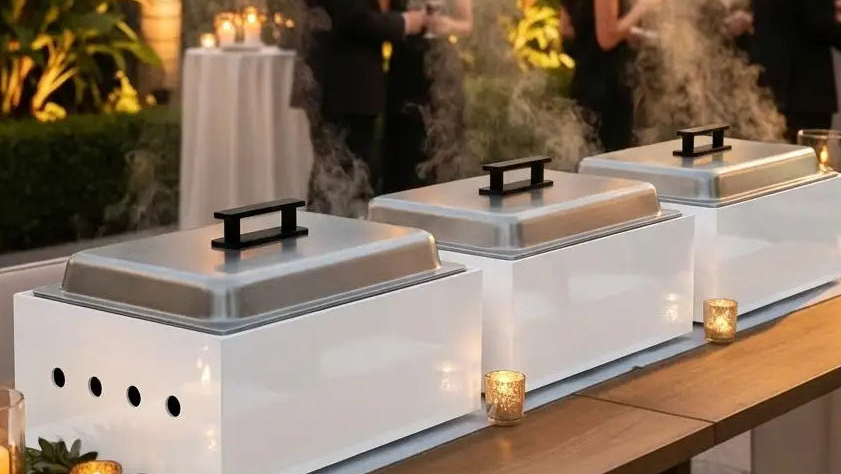
5. Chafing dish stands Built-in legs add 6 to 8 inches of automatic height. Pair chafing dishes with their stands rather than laying them flat on the table.
6. Stacked linens and fabric drapes Creates implied height under lower items. Used well, it unifies the look. Used badly, it hides product and creates food safety issues.
7. Structural props Tall vases, candlesticks, and non-food decor that fill vertical space. Use sparingly. The food should still be the subject.
Step-by-step: building a buffet table from scratch
- Measure the table. Six-foot and eight-foot banquet tables are standard. Know the usable depth (typically 30 inches).
- Identify the hero dish. One item per buffet carries the visual weight. Usually the roast, a cake, or a signature presentation.
- Place the hero on the tallest riser. Center back of the table, or if the buffet is one-sided, the back-center quadrant.
- Build the mid zone outward. Chafing dishes flank the hero. Keep chafers aligned on a single mid-height plane so they read as a unit.
- Fill the base zone. Cold platters, breadbaskets, and serving bowls go at the front edge where guests reach.
- Add asymmetric tall elements. One or two additional plinths at different heights break the symmetry and guide the eye.
- Walk the guest's path. Look at the buffet from a guest's entry angle, not from behind. Anything that blocks or confuses the path gets moved.
Common mistakes
- Everything at one height. The most common failure. Flat buffets photograph badly and slow service.
- Height without purpose. Risers used to fill space rather than raise specific dishes to eye level. If a plinth is empty or holds a trivial item, remove it.
- Mismatched materials. Clear acrylic plinths plus wooden crates plus mirrored cake stands reads as rental chaos. Pick two materials max.
- Hero dish too high. An 18-inch plinth behind a 14-inch cake means the cake is invisible. Match riser height to dish size so the food sits at the visual peak.
- Ignoring load capacity. A chafing dish full of water and food can weigh 25 pounds. Consumer-grade risers crack. Commercial 5mm acrylic plinths are rated for it.
How Plinths New York builds height
All Plinths New York display risers are cut from 5mm commercial-grade acrylic and ship as nesting sets so a caterer can transport three heights in one box. The Large Trio Set covers the full hero range (tallest, mid, short) in a single piece count. Add the white acrylic buffet risers for 100+ guests or Black Risers set to fill out the mid zone. Every piece is backed by a 3-year professional warranty, valid when the product is registered within 30 days.
For round buffet arrangements, the Round Collection adds circular plinths in matching heights. For magnetic chafing dish guards that maintain height visibility (a clear guard preserves the vertical sightline), see the Magnetic Chafing Dish Guards collection.
FAQ
What is the best height for a buffet table centerpiece? Twelve to sixteen inches above the table surface for an 8-foot banquet table. Any higher and guests cannot see past it. Any shorter and it does not anchor the display.
Can you use books or boxes to create height? Short answer: yes, for casual home catering. For professional catering, no. Books shift under weight, boxes are not food-safe, and both look improvised on camera. Use acrylic plinths or tiered risers designed for the job.
How many risers do I need for a 6-foot buffet table? Three to five, placed at three different heights. One tall plinth for the hero, two mid risers for chafing dishes, and one to two base platforms for cold items.
Do tiered risers work for cold food? Yes, if they are non-porous (acrylic, stainless, or sealed stone). Porous materials like raw wood absorb moisture and food particles and are not commercial-safe.
Related reading
- Food Display Risers for Catering: full collection
- Large Trio Set: tallest hero riser bundle
- How to Build a Tiered Buffet Display That Looks Professional: companion post on tiered-buffet structure by event size
- Best Chafing Dish Setups for Elegant Buffets and Grazing Tables
Comparing brands? Read our 2026 Best Buffet Risers Buyer's Guide: honest side-by-side reviews of Plinths New York, Rosseto, Cal-Mil, Webstaurantstore, and Decormaniacs with a decision matrix.