
Essential Catering Display Equipment: What Professional Caterers Actually Use
Catering display equipment is the collection of tools that turn a table of food into a professional presentation. For caterers charging $5,000-$15,000 per event, the display equipment determines whether the buffet looks assembled or intentional. The core categories are risers and platforms, serving vessels, food protection, and transport. Here is what working caterers carry and why.
The Five Categories of Catering Display Equipment
| Category | What It Does | Examples | Why It Matters |
|---|---|---|---|
| Risers and platforms | Create height variation across the buffet | Cube risers, trio sets, display systems | Flat tables look unfinished. Height draws the eye and makes food accessible. |
| Serving vessels | Hold and present food | Platters, bowls, graze grids, shallow plates | The vessel frames the food. Shape and material affect perception. |
| Food protection | Shield food from wind, contaminants, temperature loss | Chafing dish guards, food covers, warming equipment | Required for outdoor events. Maintains food safety and temperature. |
| Transport and storage | Move equipment between events safely | Nesting cases, padded carriers, stacking systems | Equipment that breaks in transit costs more than the equipment itself. |
| Linens and surfaces | Cover tables, create visual base layer | Table cloths, runners, placemats | The foundation. Everything else sits on top of this. |
Risers and Platforms: The Foundation of Every Display
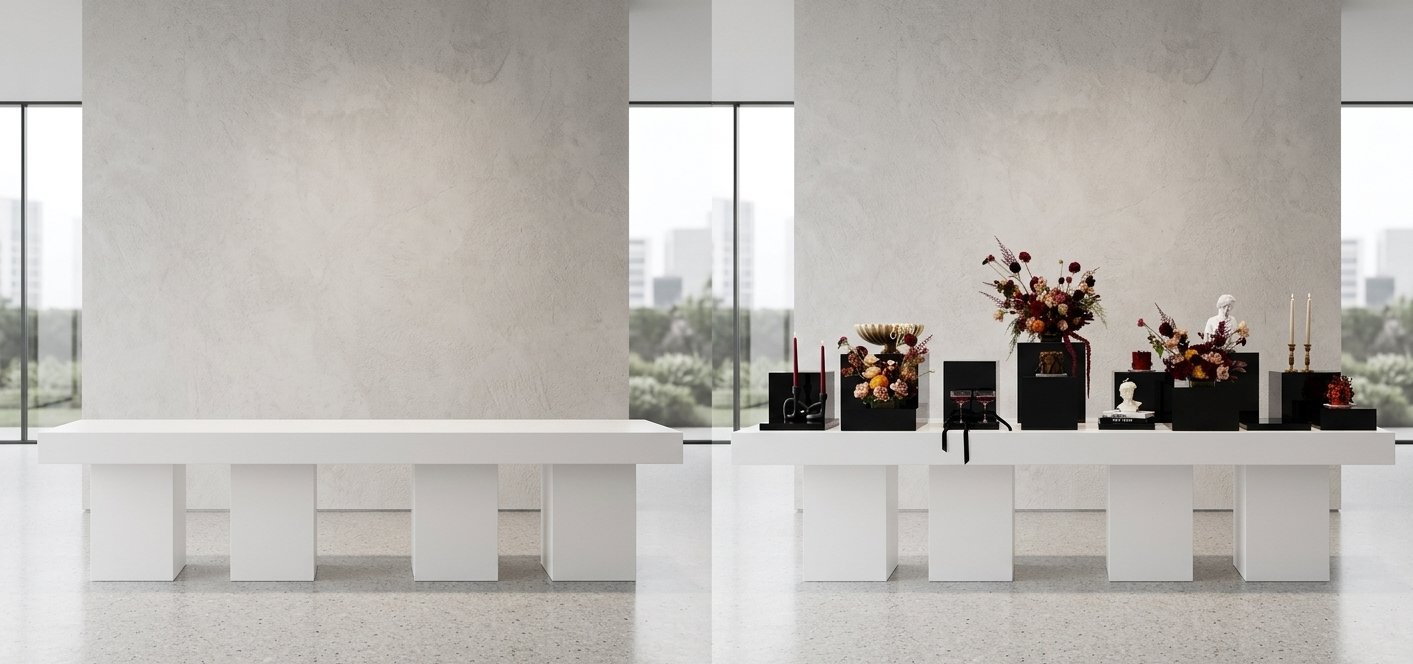
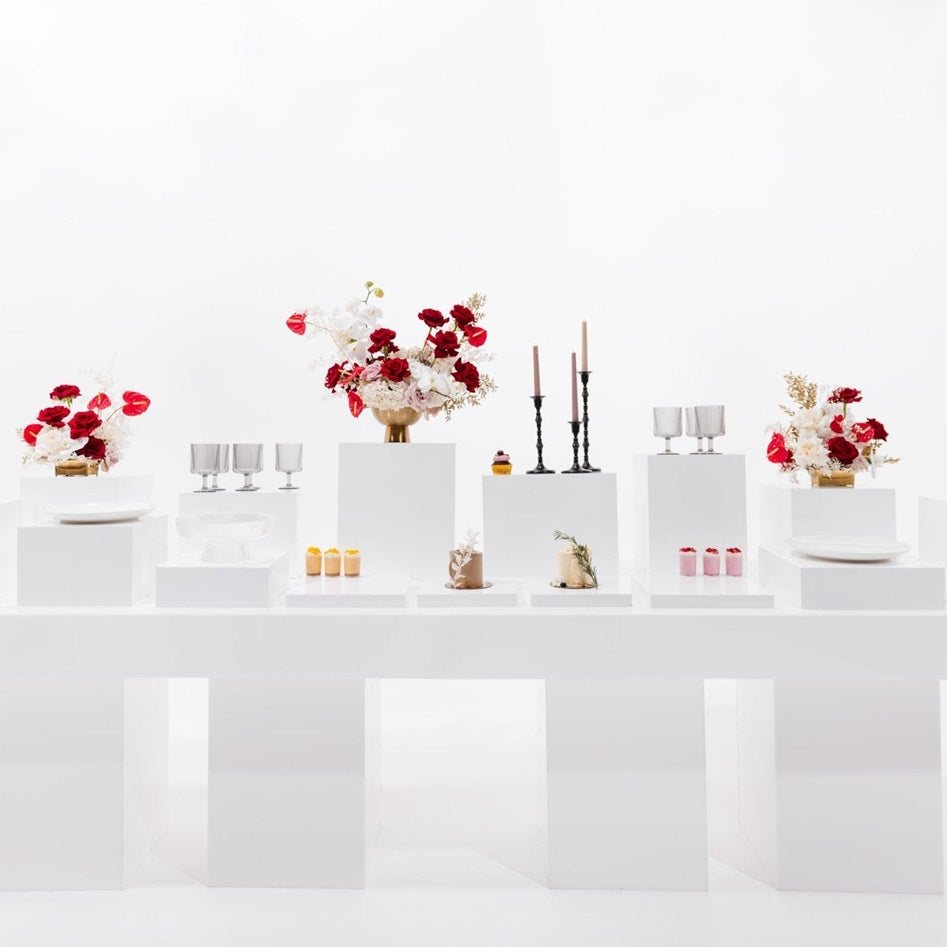
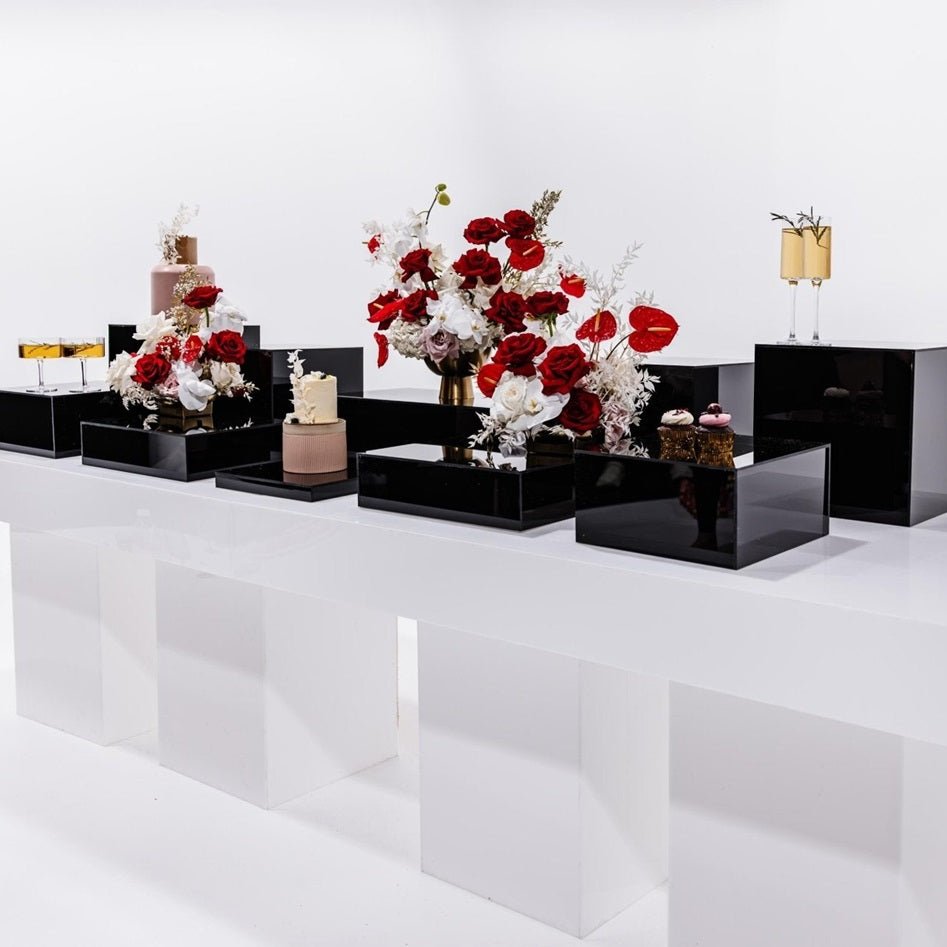
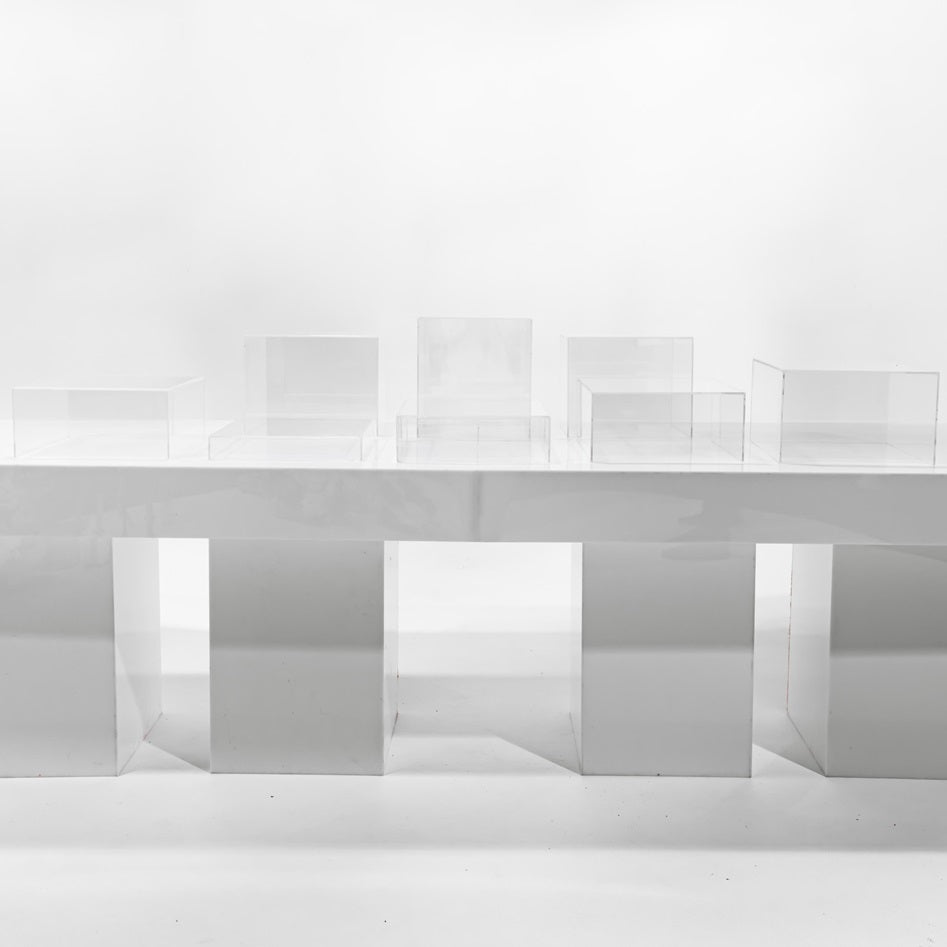
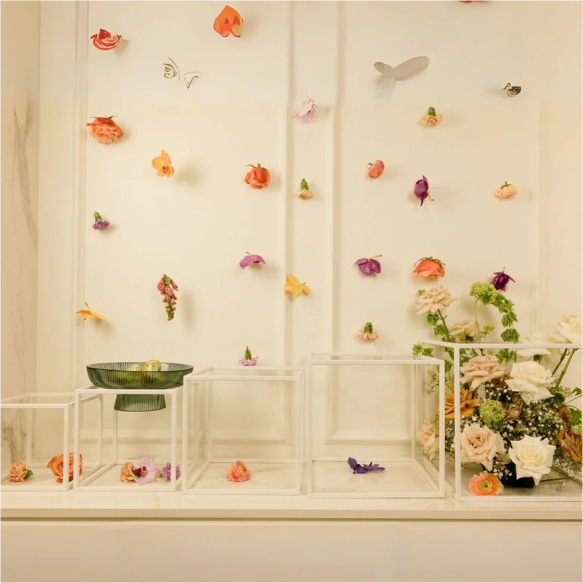
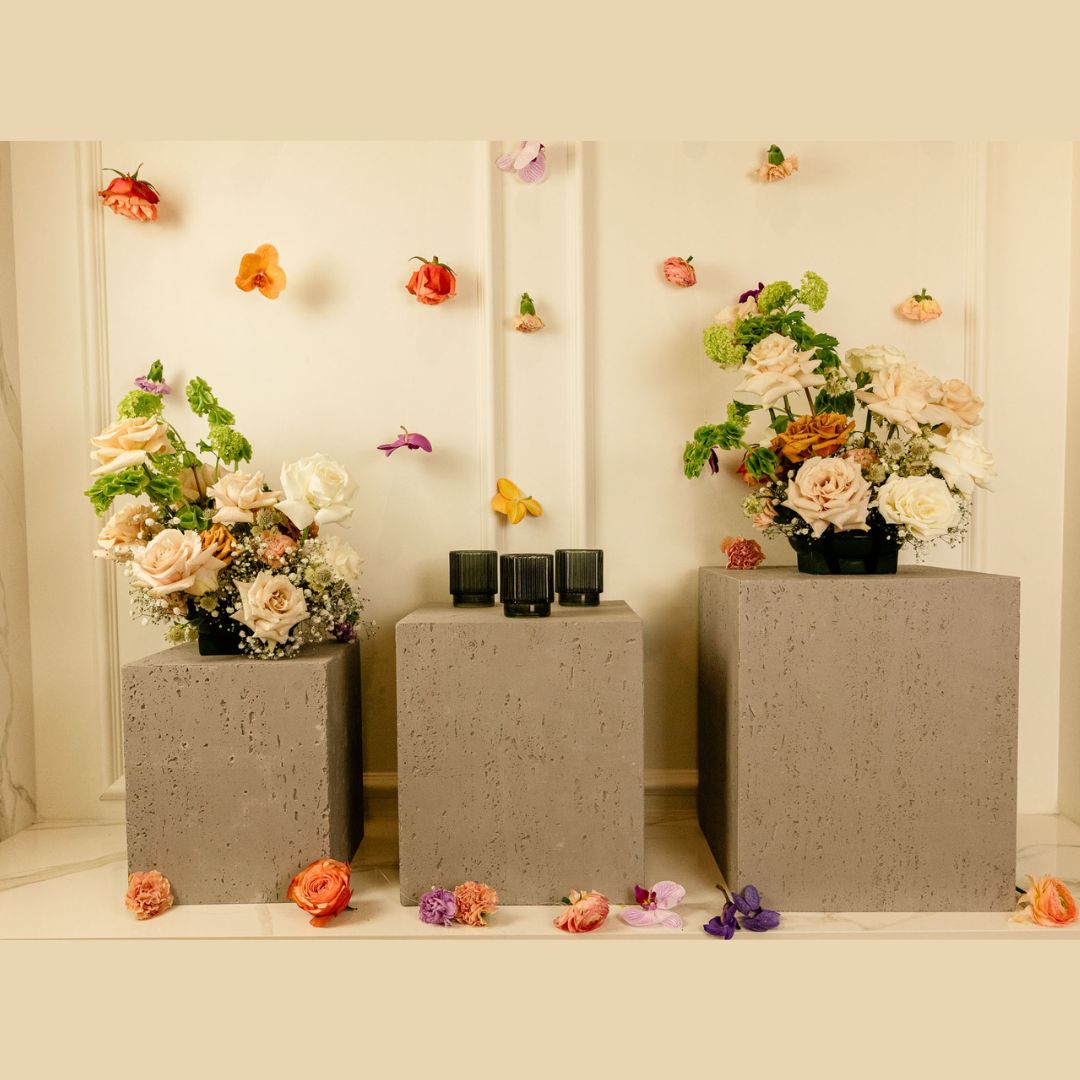
Risers are the single most impactful piece of display equipment. A buffet without risers is a flat table with food on it. A buffet with risers has dimension, visual flow, and the kind of intentional design that clients photograph and share.

Professional caterers typically carry three types of risers:
| Type | Pieces | Best For | Guest Range |
|---|---|---|---|
| Trio sets (3-piece) | 3 graduated heights | Small events, cocktail stations, accent displays | 25-50 guests |
| Nesting cube sets (7-piece) | 7 graduated cubes | Medium events, dessert bars, standard buffets | 50-75 guests |
| Full display systems (13-15 piece) | 13-15 mixed formats | Large events, full buffet coverage | 75-150 guests |
The key specification for professional risers is acrylic thickness. Consumer risers use 2-3mm acrylic that flexes, clouds, and cracks within a year of regular use. Professional risers use 5mm cast acrylic that holds 15+ pounds per piece and maintains clarity for 500+ events.
Serving Vessels: Beyond the Basic Platter
The vessel shapes the perception of the food. A round platter says "traditional." A rectangular graze grid says "modern editorial." The right vessel matches the event tone without competing with the food for attention.

Professional caterers carry a mix of vessel types:
- Shallow platters for charcuterie, sushi, and finger foods. Low profile keeps the focus on the food arrangement.
- Deep bowls for salads, dips, and sauces. Functional containment with clean lines.
- Graze grids for grazing tables. Divided sections keep different foods separated while creating a composed look.
- Rounded platters for bread, rolls, and desserts. Soft edges create a welcoming visual.
Food Protection Equipment
Outdoor events require food protection. Wind extinguishes Sterno flames, insects contaminate food, and temperature drops compromise food safety. The two essential pieces:
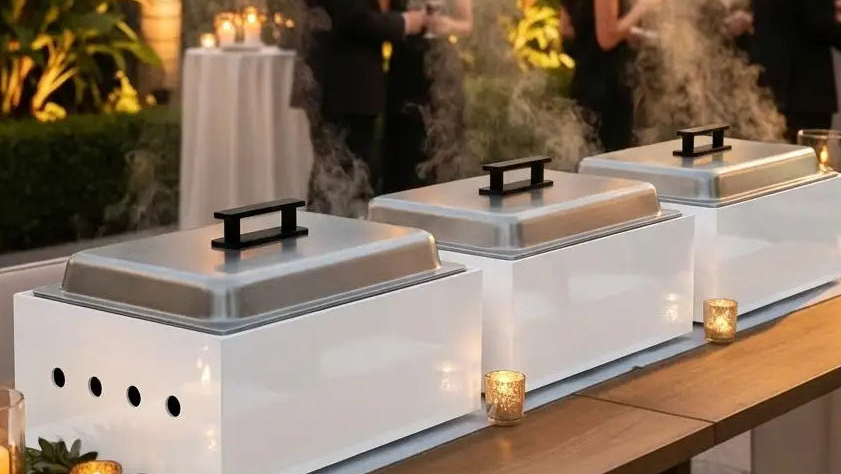
Chafing dish guards. Magnetic acrylic chafing dish guards attach to standard chafing dishes in seconds, blocking wind and covering exposed wire racks. They replace the old approach of draping fabric over wire frames, which creates fire hazards near Sterno fuel.
Food covers and domes. Clear covers protect cold items from contamination while keeping them visible. Essential for outdoor cocktail stations and dessert displays.
Transport: The Hidden Cost
Equipment that does not nest or stack costs more to transport than it cost to buy. Vehicle space is limited. Every piece that cannot nest is dead space on every trip to every event.
This is why nesting risers dominate professional catering. A 7-piece nesting set travels in the space of a single piece. Non-nesting risers, wooden crates, and metal stands each occupy their full footprint in the vehicle, regardless of whether you use them at every event.

Building Your Equipment Kit
Start with the equipment that has the highest visual impact per dollar. Risers come first because they transform the entire buffet layout. Serving vessels come second because they frame the food. Protection and transport round out the kit as your event volume grows.
| Stage | Investment | What to Buy | Events Covered |
|---|---|---|---|
| Starting out | $300-$600 | 1 trio set + basic platters | Small events (25-50 guests) |
| Growing | $1,000-$2,000 | Add 7-piece nesting set + chafing guards + graze grids | Medium events (50-100 guests) |
| Established | $3,000-$5,000 | Add 13-15 piece display system + full vessel set + transport cases | Large events (100+ guests) |
Browse the full display equipment collection.
FAQ
What equipment do professional caterers use for buffet displays?
Professional caterers use five categories of display equipment: risers and platforms for height variation, serving vessels (platters, bowls, graze grids) for food presentation, chafing dish guards for food protection, nesting transport systems, and linens. The most impactful single purchase is a set of acrylic display risers.
How much does professional catering display equipment cost?
A starter kit (trio riser set + basic platters) costs $300-$600. A mid-level setup (7-piece nesting set + chafing guards + graze grids) costs $1,000-$2,000. A full professional kit (13-15 piece display system + full vessel set + transport) costs $3,000-$5,000. Equipment lasts 500+ events with proper care.
What is the most important piece of catering display equipment?
Display risers. They transform a flat table of food into a tiered, professional presentation. Everything else (vessels, linens, protection) builds on the foundation that risers create. Start with a 3-piece trio set and expand from there.
Why do caterers use acrylic risers instead of wood or metal?
Acrylic risers nest inside each other for compact transport, wipe clean in seconds between events, weigh less than wood or metal, and the clear material lets the food and table linen show through without adding visual weight. Professional-grade 5mm acrylic lasts 500+ events.
How do I transport catering display equipment safely?
Use nesting equipment whenever possible. A 7-piece nesting riser set travels in the space of a single piece. For non-nesting items, use padded dividers or dedicated transport cases. Acrylic is shatter-resistant but can scratch if pieces slide against each other without protection.
Last updated: April 14, 2026
Comparing brands? Read our 2026 Best Buffet Risers Buyer's Guide — honest side-by-side reviews of Plinths NY, Rosseto, Cal-Mil, Webstaurantstore, and Decormaniacs with a decision matrix.