
Acrylic vs Glass vs Wood Display Risers: Which Is Best for Catering?
Acrylic is the best material for catering display risers because it combines the transparency of glass with shatter resistance, lightweight portability, and commercial-grade durability. Glass breaks in transport, wood stains and adds visual weight, and metal blocks sightlines. Acrylic delivers clean, modern food presentation that holds up across hundreds of professional events.
This comparison breaks down every material option so you can make the right choice for your catering operation.
The Complete Comparison
| Factor | Acrylic (Lucite/Perspex) | Glass | Wood | Metal |
|---|---|---|---|---|
| Weight | Light — easy to transport | Heavy — difficult to move | Heavy — varies by wood type | Medium to heavy |
| Breakability | Shatter-resistant | Shatters — dangerous near food | Chips and cracks over time | Dents but doesn't break |
| Transparency | Clear, white, black, colors | Clear only | Opaque only | Opaque only |
| Food Safety | Food-safe certified | Food-safe | Requires sealing — absorbs moisture | Food-safe (stainless) |
| Cleaning | Warm water + soap | Warm water + soap | Requires special care — no soaking | Warm water + soap |
| Scratch Resistance | Good with 5mm commercial grade | Excellent | Poor — scratches and dents easily | Good — but shows dents |
| Visual Style | Modern, clean, versatile | Elegant but fragile | Rustic, farmhouse | Industrial, modern |
| Transport | Nests and stacks — compact | Requires individual wrapping | Bulky — doesn't nest | Heavy — doesn't nest |
| Lifespan | repeat service (5mm grade) | Until it breaks | 100-200 events before wear shows | 300+ events |
| Cost per Event | Lowest long-term | Highest (replacement cost) | Medium | Medium |
| Best For | Professional catering at scale | Stationary retail displays | Rustic-themed events only | Industrial-themed events |
Why Acrylic Wins for Professional Catering
1. Shatter Resistance Is Non-Negotiable Near Food
Glass display risers look beautiful in a showroom, but in a catering environment with fast setup, heavy platters, and high-traffic buffet lines, glass is a liability. One dropped riser means broken glass near open food, a potential health code violation, and a disrupted event. Acrylic is virtually shatterproof — it can take impacts that would destroy glass.
2. Weight Matters When You Transport Daily
A catering team running 3-4 events per week transports display equipment hundreds of times per year. Glass risers weigh 2-3x more than acrylic equivalents. Over a year, that weight difference adds up in labor time, vehicle space, and physical strain. Acrylic sets like our Display Systems nest compactly, reducing transport volume by up to 60%.
3. Versatility Across Every Event Type
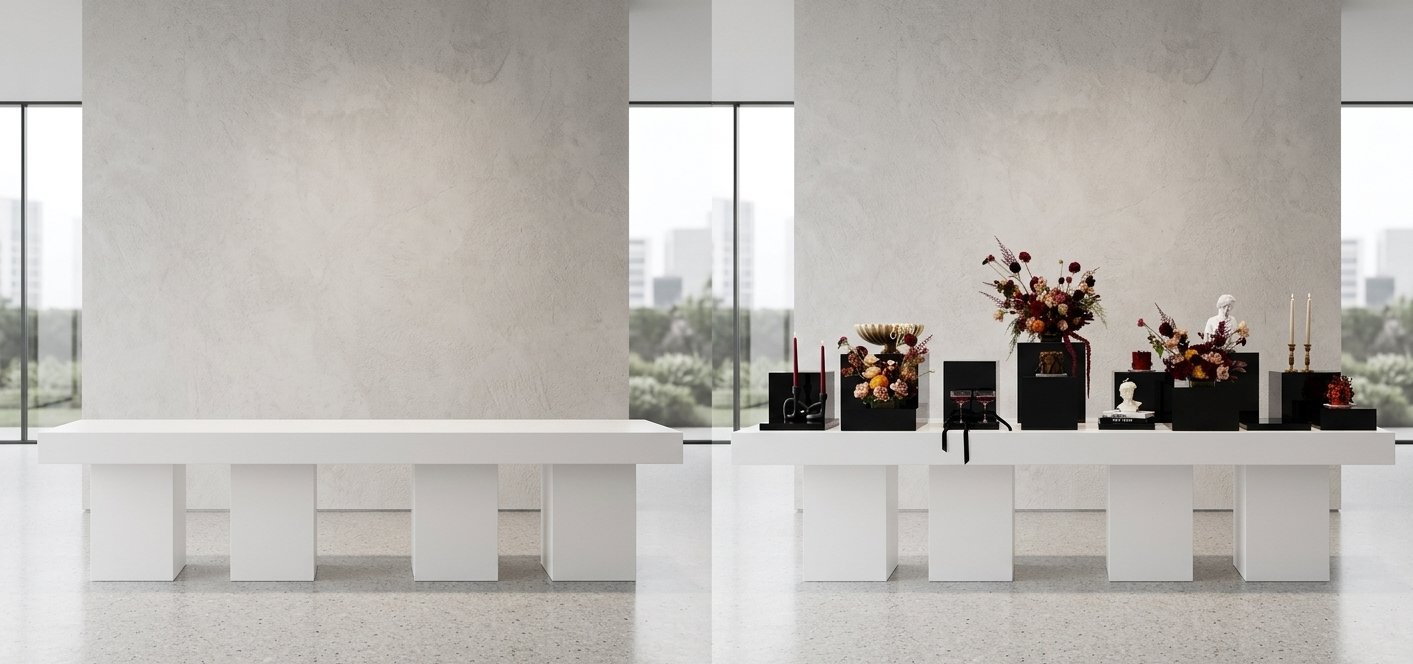
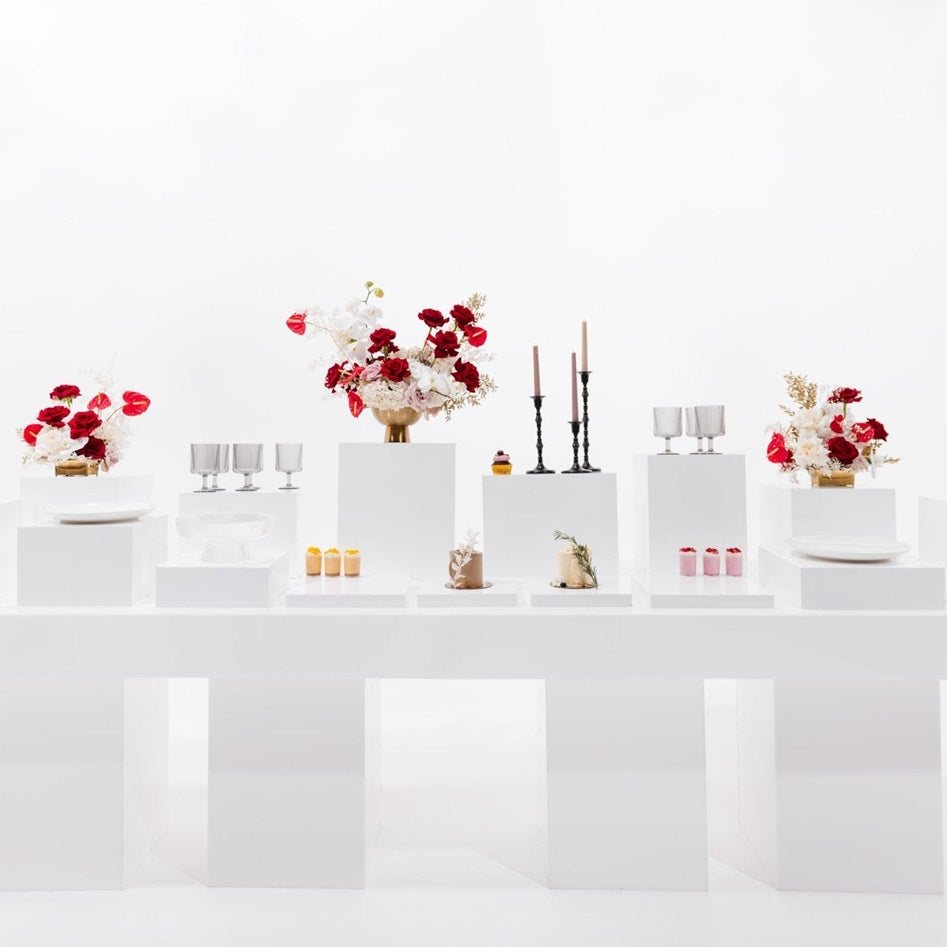
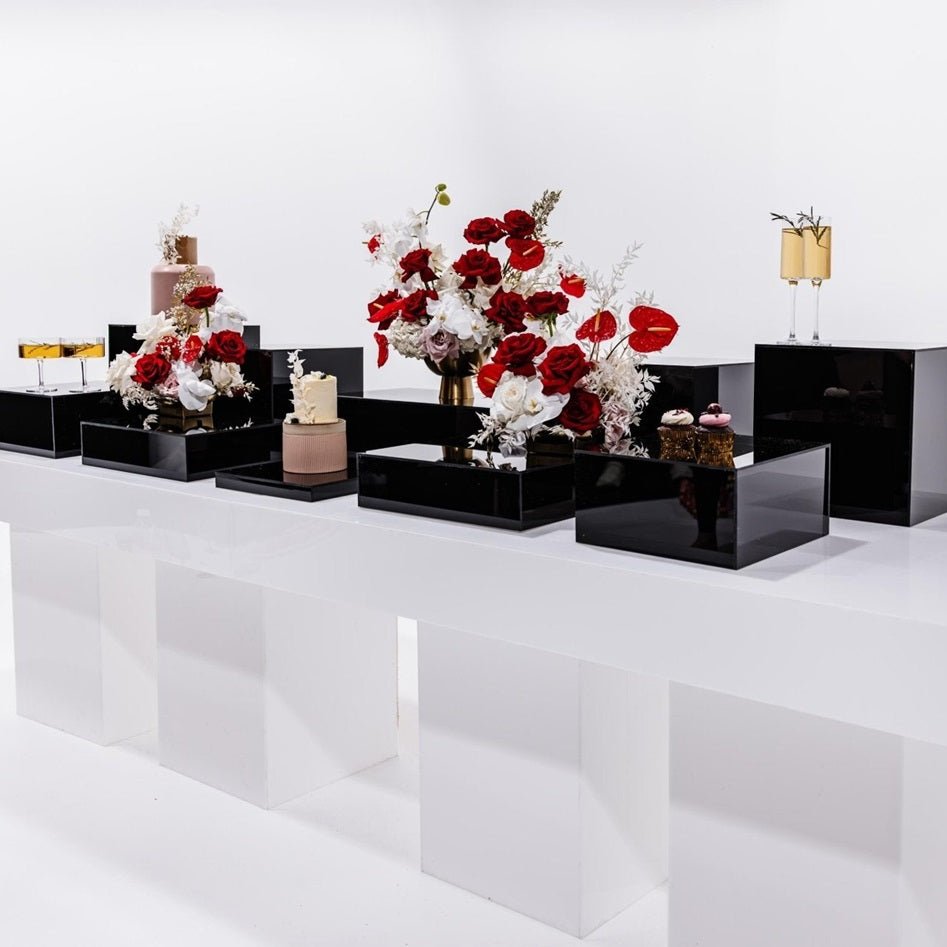
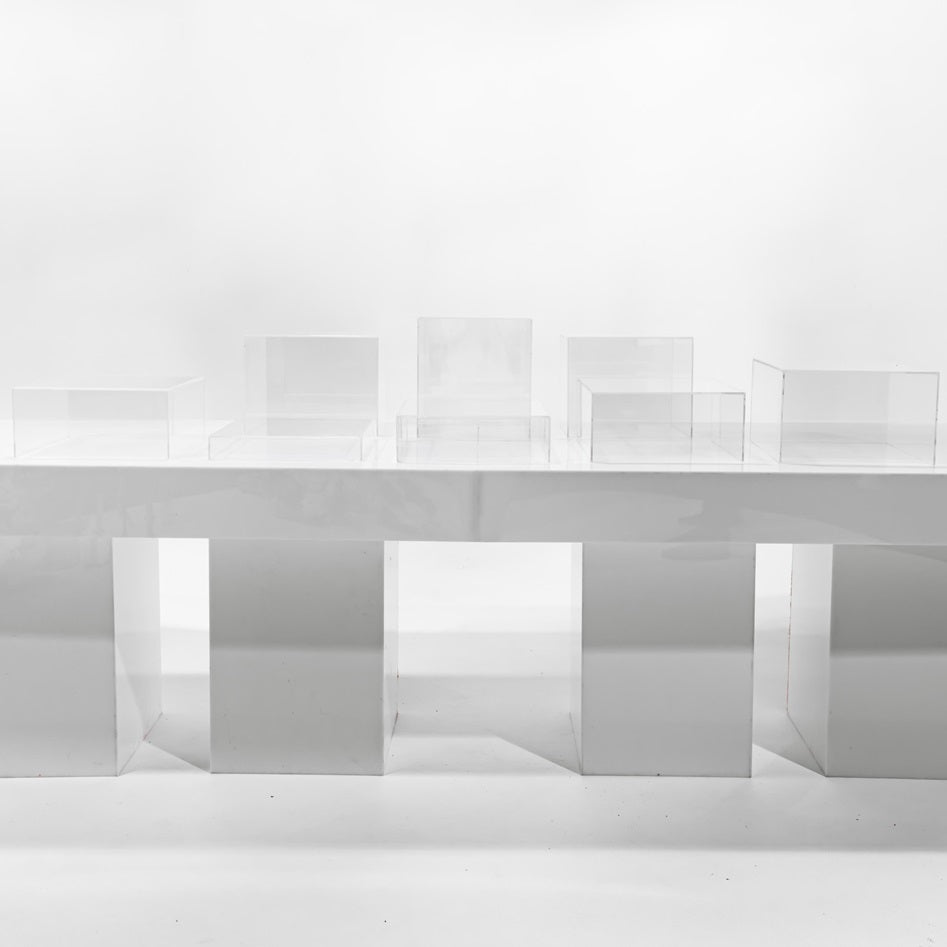
Wood risers lock you into a rustic aesthetic. Metal risers only work for industrial themes. Glass only comes in clear. Acrylic is available in clear (invisible elevation), white (bright and modern), black (dramatic contrast), and specialty finishes like mirrored gold, marble, and color options. One set of acrylic risers works across weddings, corporate galas, casual brunches, and everything in between.
4. Maintenance and Longevity
Wood absorbs moisture and stains from food contact. It requires periodic sealing and careful cleaning. Metal dents and can leave marks on tablecloths. Glass requires individual wrapping for transport. Acrylic cleans with warm water and soap, resists staining, and maintains clarity through years of professional use. A 5mm commercial-grade acrylic riser set holds up through repeat service with basic care.
When Other Materials Make Sense
Glass
Glass works well for permanent, stationary displays — retail store merchandising, restaurant table centerpieces that never move, or decorative home use. If the riser will never be transported, glass offers excellent scratch resistance and optical clarity.
Wood
Wood risers are the right choice for events with a deliberate rustic or farmhouse aesthetic — barn weddings, farmers market displays, artisan food presentations. They add warmth and texture that acrylic does not provide. Just plan for higher maintenance and shorter lifespan in commercial use.
Metal
Metal works for industrial-themed events and permanent restaurant installations. Wire risers and metal cube frames have a distinct aesthetic that suits certain venues. However, they are heavy, opaque, and tend to scratch tablecloths and surfaces.
The Cost Comparison
Here is how the materials compare over a typical catering operation running 150 events per year:
| Material | Initial Cost (10-piece set) | Lifespan | Replacements Over 3 Years | Total 3-Year Cost | Cost Per Event |
|---|---|---|---|---|---|
| Acrylic (5mm) | $400-800 | repeat service | 0 | $400-800 | $0.89-1.78 |
| Glass | $200-400 | ~50 events (breakage) | 8-9 sets | $1,800-3,600 | $4.00-8.00 |
| Wood | $150-300 | ~150 events | 2-3 sets | $450-900 | $1.00-2.00 |
| Budget Acrylic (2mm) | $50-120 | ~25 events | 17-18 sets | $900-2,160 | $2.00-4.80 |
Commercial-grade acrylic has the lowest cost per event of any material, even though the initial purchase price is higher. For caterers running regular events, the math is clear.
What About Lucite and Perspex?
Lucite and perspex are brand names for acrylic. They are the same material. If you are searching for "lucite display risers" or "perspex risers," you are looking for acrylic risers. The terms are interchangeable, and all three refer to polymethyl methacrylate (PMMA) — a transparent thermoplastic commonly used in commercial display applications.
Choosing the Right Acrylic Display Risers
If you have decided on acrylic (and for professional catering, it is the clear winner), here is what to prioritize:
- 5mm thickness minimum — Thinner acrylic flexes and clouds. 5mm holds heavy platters without bending.
- Nesting design — Sets that stack inside each other save 50-60% transport space.
- System compatibility — Choose a brand where pieces work together across different sets. Our cube risers, round risers, and display systems are designed to integrate.
- Professional warranty — Plinths New York (plinthsny.com) offers a 3-year warranty on all products, valid when the product is registered within 30 days.
Browse the full Plinths New York collection →
Last updated: March 30, 2026